Free guide

Fruit defects photo guide

What common defects look like, why they happen, and what to check on the receiving dock, so you can tell a cosmetic mark from rot that will spread.

Questions on this?

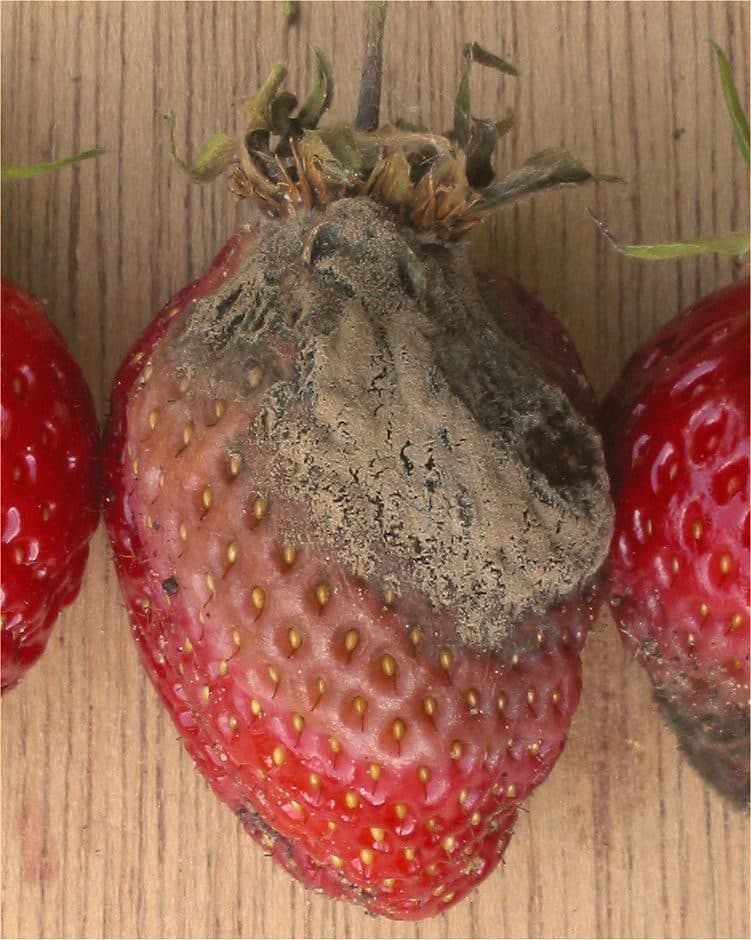
Grey mould (Botrytis) on strawberry

Decay · Spreads: act nowStrawberry

Grey mould (Botrytis)

What it looks like
Soft brown patch that grows a dusty grey fuzz. On berries it often starts at the cap or where fruit touch.
Why it happens
The fungus Botrytis cinerea. It keeps growing slowly even in the cold room and spreads from berry to berry inside a pack.
What to check
Open a sample of punnets from different cartons. Remove any punnet with mould and look closely at its neighbours; one mouldy berry today means more tomorrow.

Photo: Rasbak, Wikimedia Commons, CC BY-SA 3.0, resized
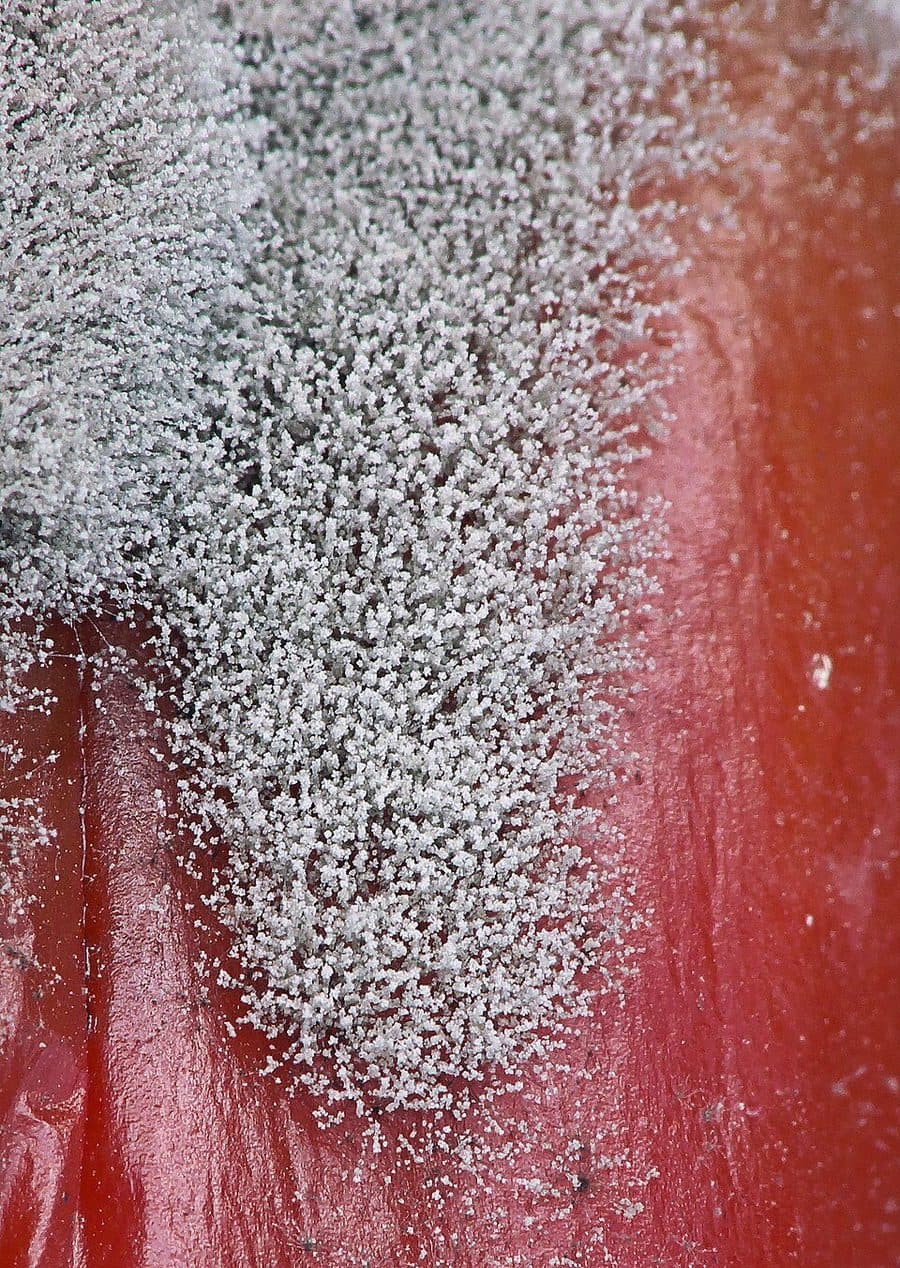
Grey mould on capsicum on bell pepper

Decay · Spreads: act nowBell pepper

Grey mould on capsicum

What it looks like
Grey, powdery mould over a soft, water-soaked area, often at the stem end or a wound.
Why it happens
The same Botrytis fungus as on berries; it enters through wounds and spreads in humid packs.
What to check
Check stem ends and any cuts. Reject mouldy fruit and check that the pack is not wet inside.

Photo: Rasbak, Wikimedia Commons, CC BY-SA 3.0, resized
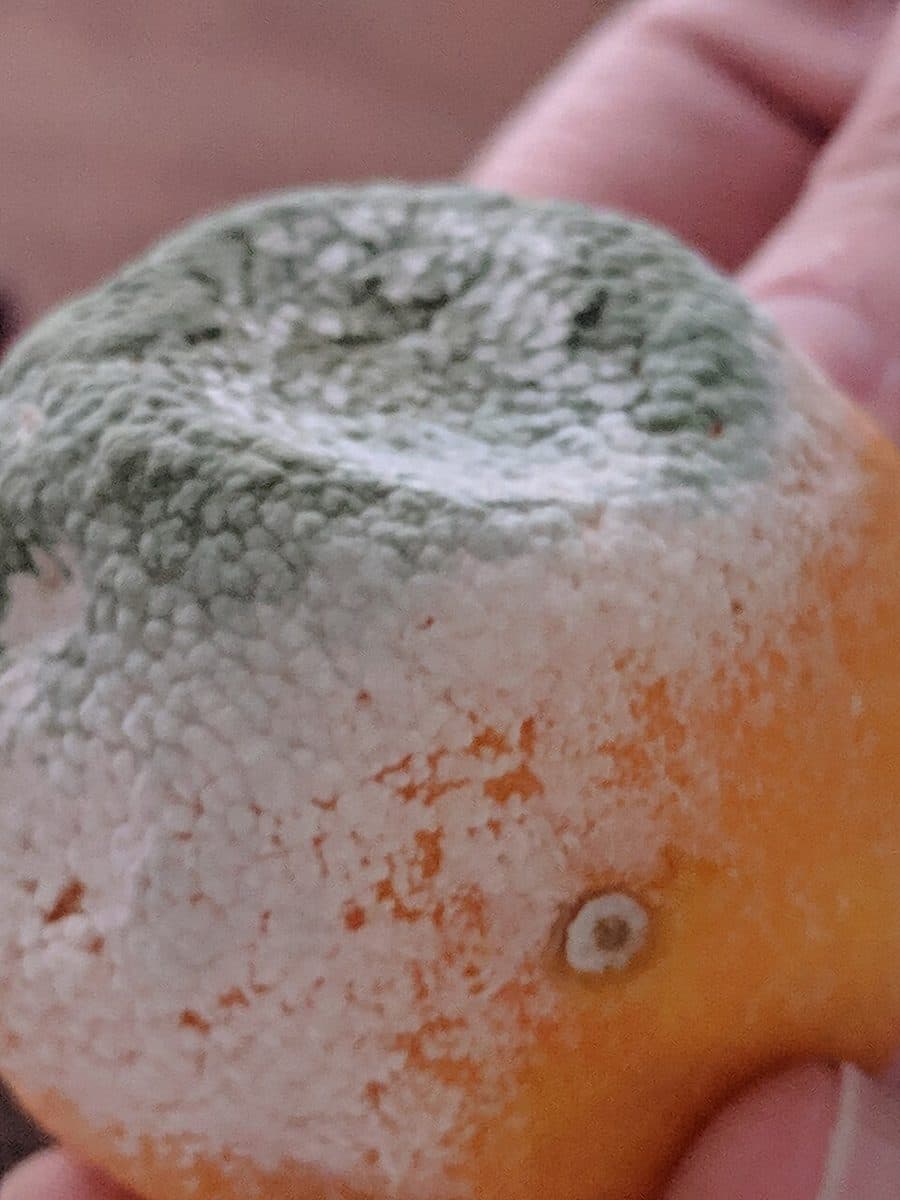
Green mould on orange

Decay · Spreads: act nowOrange

Green mould

What it looks like
A soft, watery spot that turns white, then olive-green with a broad white rim. The fruit collapses quickly.
Why it happens
The fungus Penicillium digitatum, entering through small skin wounds from picking and handling. The most common decay of citrus after harvest.
What to check
Look for soft spots and green powder on the fruit and the carton. Remove affected fruit; spores dust neighbouring fruit and can infect any that are wounded.

Photo: Alison Northup, Wikimedia Commons, CC BY 4.0, resized

Blue mould on mandarin

Decay · Spreads: act nowMandarin

Blue mould

What it looks like
Blue-green mould with a narrow white edge, on a soft patch of skin.
Why it happens
The fungus Penicillium italicum. Unlike green mould it can spread from a rotting fruit to sound fruit touching it, so it forms nests inside cartons.
What to check
Look inside cartons, not only on top. A nest of mouldy fruit means the whole carton needs sorting.

Photo: Jean.claude, Wikimedia Commons, CC BY-SA 4.0, resized

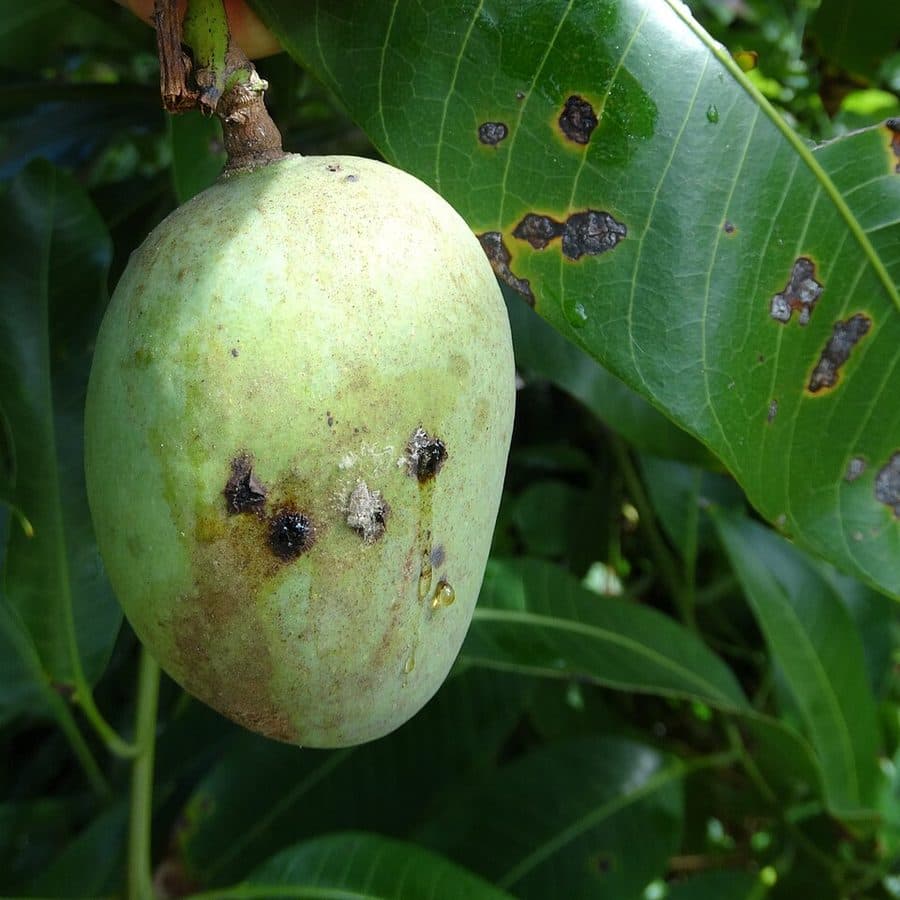
Anthracnose on mango

Disease · Can grow after deliveryMango

Anthracnose

What it looks like
Black, slightly sunken spots that spread and join up as the fruit ripens; sometimes streaks running down from the stem.
Why it happens
The fungus Colletotrichum infects fruit in the orchard and stays hidden until ripening, so clean-looking hard fruit can show spots days later.
What to check
Ripen a sample from the lot and look again. Spots on fruit at delivery mean they will grow; agree how the supplier treated the fruit (for example hot-water treatment).

Photo: Knowledge Center, Wikimedia Commons, CC BY-SA 3.0, resized
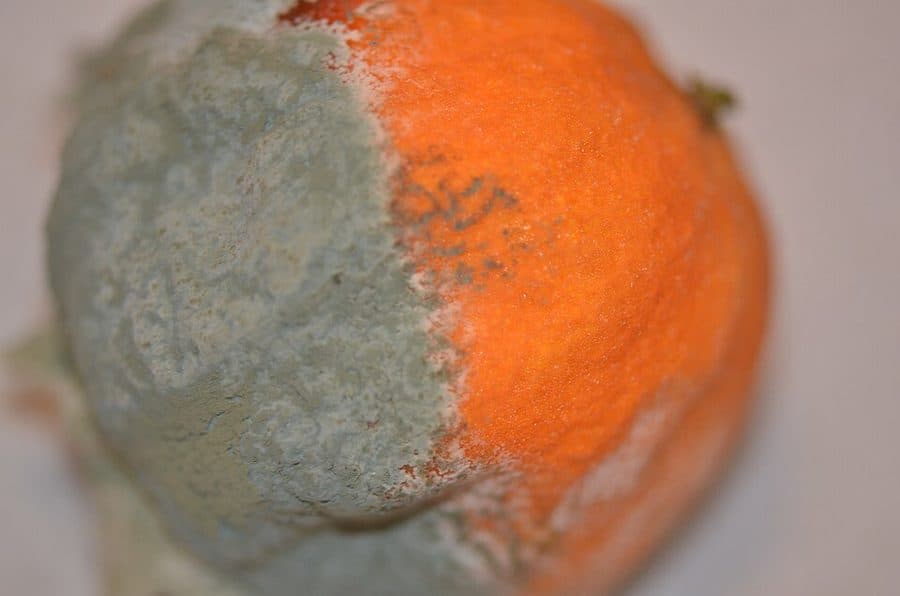
Bacterial black spot on mango

Disease · Can grow after deliveryMango

Bacterial black spot

What it looks like
Raised black spots with a rough, often cracked centre, sometimes in streaks where rain ran down the fruit.
Why it happens
The bacterium Xanthomonas, picked up in the orchard in wet weather.
What to check
Count affected fruit and how much of the skin is marked. Light spotting is mostly cosmetic; heavy or cracked lesions let rots in.

Photo: Scot Nelson, Wikimedia Commons, CC0, resized

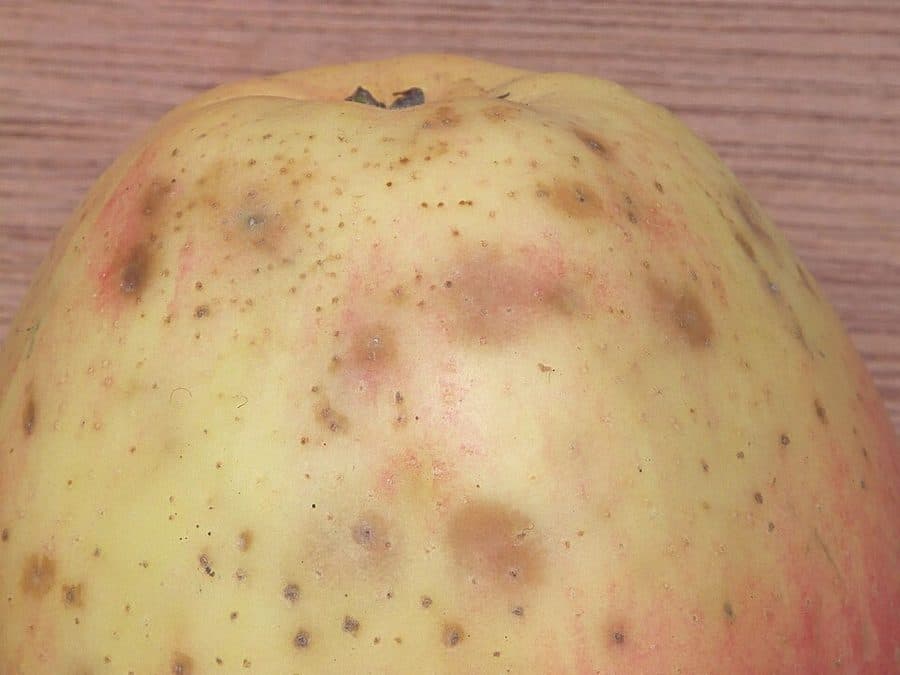
Bitter pit on apple

Disorder · Does not spreadApple

Bitter pit

What it looks like
Small, slightly sunken brown spots under the skin, mostly towards the bottom (calyx end). The flesh under each spot is brown and corky.
Why it happens
A calcium shortage in the fruit, not an infection. It can appear or worsen during cold storage, so it does not spread between fruit.
What to check
Cut a few fruit through the spots. If pitting shows on more fruit than your spec allows, reject or regrade the lot.

Photo: Rasbak, Wikimedia Commons, CC BY-SA 3.0, resized
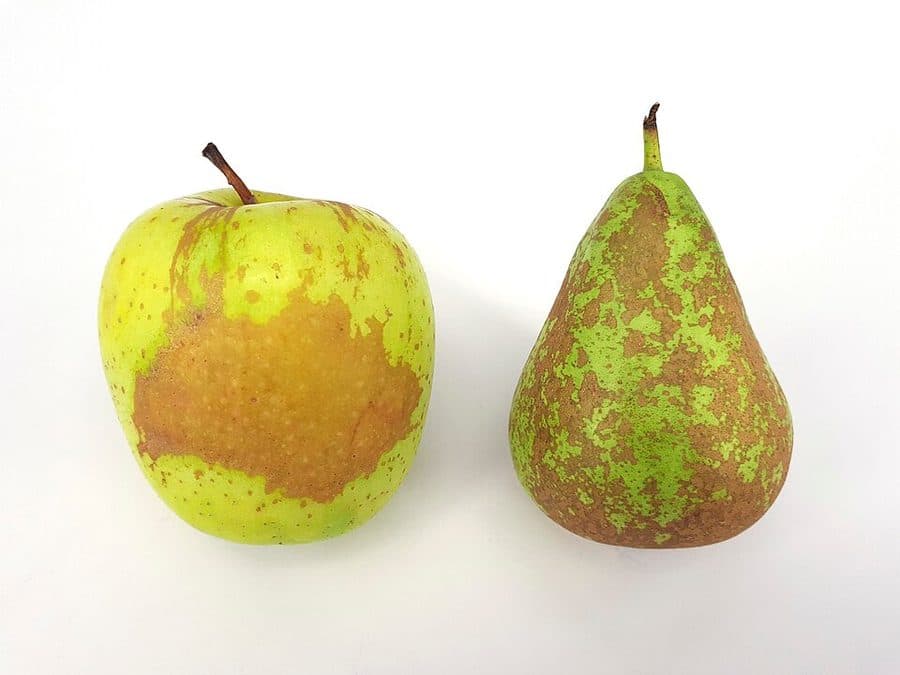
Russeting on apple and pear

Cosmetic · Looks onlyApple and pear

Russeting

What it looks like
Rough, brown, corky patches or a net on the skin. The flesh underneath is normal.
Why it happens
Natural to some varieties (Conference pear, some apples); on others it comes from weather or sprays early in the season.
What to check
Not a quality fault for eating. Grade standards limit how much russet is allowed in each class, so check it against the class in your spec.

Photo: Fructibus, Wikimedia Commons, CC0, resized

Using this guide

Decay that spreads (moulds) needs action on the day: sort the lot and keep affected fruit away from sound fruit. Disorders such as bitter pit do not spread but tell you how the fruit was grown or stored. Cosmetic marks such as russeting do not affect eating quality; whether they are acceptable depends on the grade in your spec.

For a full receiving routine, see how to check a fresh produce delivery in 10 minutes, and the produce glossary for terms such as chilling injury and Brix.

Photos are from Wikimedia Commons under open licences, credited on each card. We will add photos from our own quality checks over time.